

Steam is widely used in food production for cooking, heating, sterilization, cleaning, mixing, and temperature control. However, when steam comes into direct contact with food, ingredients, packaging materials, tanks, or sanitary pipelines, ordinary industrial steam may not be suitable.
Rust, scale, oil, boiler treatment chemicals, pipe contamination, and excessive moisture may affect food quality and production hygiene. For these applications, food manufacturers need a clean steam system designed around feedwater quality, sanitary materials, steam dryness, pressure stability, and condensate control.
The NOBETH clean steam generator is designed to provide stable and hygienic steam for food and beverage production. The system can be customized according to the customer’s steam capacity, working pressure, heating method, water quality, production process, and local power supply.
What Is a Clean Steam Generator for Food Processing?
A clean steam generator produces steam from treated water through a separate and controlled steam-generation system.
Compared with ordinary industrial boilers, a clean steam system places greater attention on:
- Feedwater quality
- Steam-contact materials
- Internal surface cleanliness
- Steam dryness
- Contamination control
- Condensate discharge
- Sanitary piping
- Pressure and flow stability
Depending on the food process, a complete system may include a water softener, reverse osmosis unit, purified water tank, clean steam generator, steam separator, steam filter, pressure controller, flow controller, sanitary pipeline, and steam distribution header.
Why Ordinary Industrial Steam May Not Be Suitable
Ordinary industrial steam is suitable for many indirect heating applications. However, it may pass through carbon steel boilers, long steam pipelines, old valves, and ordinary distribution systems.
During this process, steam may carry:
- Rust particles
- Scale
- Pipe impurities
- Boiler treatment chemical residues
- Oil contamination
- Excessive condensate
- Unstable pressure
When steam directly contacts food or hygiene-sensitive equipment, these contaminants may create quality and production risks.
Possible consequences include:
- Changes in product taste or appearance
- Deposits on food-contact surfaces
- Unstable cooking or heating results
- Contamination of tanks and pipelines
- Reduced sterilization reliability
- Increased cleaning frequency
- Higher maintenance costs
For this reason, direct food-contact steam should be evaluated as part of the production process rather than treated only as a general factory utility.
Applications of Clean Steam in Food Production
Direct Steam Injection
Direct steam injection is used to heat products rapidly by injecting steam directly into liquids or food materials.
Common applications include:
- Cheese melting
- Dairy processing
- Sauce heating
- Soup production
- Beverage heating
- Starch cooking
- Mixing and emulsification
- Liquid food temperature control
Because the steam becomes part of the process, feedwater quality and steam purity are especially important.
A recommended configuration may include:
Clean Steam Generator
→ Sanitary Steam Separator
→ Steam Filter
→ Pressure and Flow Control
→ Food Processing Equipment
This arrangement helps reduce moisture, particles, and pressure fluctuations before the steam enters the production equipment.
Food Cooking and Heating
Clean steam can be used for:
- Meat cooking
- Seafood processing
- Vegetable blanching
- Grain cooking
- Ready-meal production
- Bakery heating
- Kettle heating
- Jacketed vessel heating
For jacketed heating systems where steam does not directly contact the food, the required steam cleanliness may be lower. However, clean steam may still be preferred in hygiene-sensitive factories.
Dairy and Cheese Processing
Dairy products are sensitive to contamination, temperature variation, and inconsistent heating.
Clean steam can be used for:
- Milk heating
- Cheese melting
- Yogurt production
- Cream processing
- Tank sterilization
- Pipeline sterilization
- Mixing vessel heating
- Direct steam injection
For dairy applications, SS316L steam-contact components and treated feedwater are often considered, especially when steam directly contacts the product.
Beverage Production
Clean steam can support:
- Beverage heating
- Syrup preparation
- Mixing tank sterilization
- Filling-line sterilization
- Bottle and cap treatment
- Sanitary pipeline cleaning
- Process humidification
Stable steam pressure helps maintain consistent production temperatures and reduces process variation.
Tank and Pipeline Sterilization
Food factories frequently use steam to clean or sterilize:
- Mixing tanks
- Storage tanks
- Fermentation tanks
- Filling lines
- Product pipelines
- Filters
- Valves
- Processing vessels
A well-designed system should provide stable temperature, sufficient steam flow, effective condensate drainage, and suitable sanitary connections.
Bottle and Jar Sterilization
Clean steam can be used in systems for:
- Glass jar sterilization
- Bottle washing
- Container heating
- Packaging-line sterilization
- Hot-water generation
- Drying-process support
The required steam capacity depends on the number of containers per hour, sterilization temperature, heating time, and production-line design.
Main Features of the NOBETH Clean Steam Generator
Sanitary Stainless Steel Construction
NOBETH clean steam generators can be configured with stainless steel components for surfaces that contact feedwater, steam, and condensate.
Depending on the hygiene level, customers may select:
- SS304 stainless steel
- SS316L stainless steel
- Sanitary valves and fittings
- Hygienic steam pipelines
- Polished internal surfaces
- Drainable system design
SS316L is generally recommended for higher hygiene requirements, direct food-contact processes, or applications with more demanding water-quality conditions.
The final material selection should be based on the customer’s process rather than applying one configuration to every project.
Stable Steam Output
Stable steam output is important for food quality and production efficiency.
The control system can automatically manage:
- Water feeding
- Heating
- Working pressure
- Water level
- Temperature
- Operating alarms
- Safety protection
PLC and touchscreen control can also be customized according to the project requirements.
Water Treatment Integration
Water quality directly affects steam cleanliness, scale formation, equipment life, and maintenance frequency.
According to the raw water condition, the system may include:
- Water softener
- Precision filter
- Activated carbon filter
- Reverse osmosis system
- Purified water tank
- Stainless steel feedwater tank
A water softener mainly reduces hardness and scale formation. A reverse osmosis system removes a wider range of dissolved substances and is more suitable for applications with higher steam-quality requirements.
RO water is not automatically required for every food process. The correct system should be selected according to the raw water report and the final steam application.
Steam Separation and Filtration
A steam separator removes entrained water droplets and improves steam dryness.
A steam filter can provide additional particle control before the steam enters food-contact equipment.
These components are especially important for:
- Direct steam injection
- Food cooking
- Dairy processing
- Packaging sterilization
- Sanitary tank sterilization
Automatic Safety Protection
The equipment can be equipped with:
- Low-water protection
- Overpressure protection
- Automatic water-level control
- Temperature monitoring
- Pressure control
- Safety valve
- Alarm display
- Emergency stop
- Pump protection
The exact safety configuration depends on the selected model, pressure, heating method, and local requirements.
How to Select the Correct Steam Capacity
Steam capacity is normally expressed in kilograms per hour.
The correct steam output should be calculated according to:
- Type of food product
- Production capacity per hour
- Initial product temperature
- Target temperature
- Heating time
- Tank volume
- Number of steam-using machines
- Simultaneous steam demand
- Sterilization cycle
- Heat loss
- Future capacity expansion
For example, selecting a steam generator only according to electrical power may result in insufficient steam, slow heating, unstable pressure, or unnecessary energy consumption.
For accurate selection, customers should provide production data and equipment information before requesting a quotation.
Electric, Gas, Diesel, or Industrial Steam Heating
NOBETH can provide different clean steam solutions according to the customer’s utility conditions.
Electric Clean Steam Generator
Electric heating is suitable for:
- Clean production areas
- Small and medium steam demand
- Factories without a boiler room
- Applications requiring accurate control
- Projects where combustion equipment is not preferred
Customers should confirm voltage, phase, frequency, and available electrical capacity.
Gas or Diesel Clean Steam Generator
Gas and diesel heating may be suitable for:
- Larger steam demand
- Limited electrical capacity
- Continuous production
- Areas with available fuel supply
The installation area should meet ventilation, combustion, exhaust, and local safety requirements.
Industrial Steam-Heated Clean Steam Generator
Factories with an existing central boiler can use ordinary industrial steam as the heating source for a secondary clean steam generator.
The industrial steam side and clean steam side remain separated. This allows the factory to use its existing energy system while producing a cleaner steam supply for food-contact or hygiene-sensitive processes.
Typical Clean Steam System Configuration
A complete food-processing clean steam system may include:
- Raw water supply
- Water softener or RO system
- Stainless steel water tank
- Clean steam generator
- Sanitary steam separator
- Steam filter
- Pressure control valve
- Flow-control system
- Steam distribution header
- Sanitary steam pipeline
- Condensate discharge system
- Food processing equipment
NOBETH can provide a single steam generator or a complete system solution based on the customer’s factory layout and production process.
Clean Steam vs. Pure Steam in Food Processing
Clean steam and pure steam are not always the same.
Clean steam is generally produced from treated water using sanitary steam-generation and distribution equipment. It is widely used in food, beverage, dairy, cosmetics, laboratories, and hygiene-sensitive industrial applications.
Pure steam normally refers to a higher-purity steam specification with stricter requirements for feedwater, system design, materials, condensate quality, and testing.
Most food factories do not need to select pure steam only because it has a higher specification. The appropriate steam grade should be determined by:
- Whether steam directly contacts food
- Customer hygiene standards
- Product sensitivity
- Condensate-quality requirements
- Local regulations
- Production validation requirements
Choosing the correct steam quality can prevent both insufficient system design and unnecessary investment.
Why Choose NOBETH?
Founded in 1999, NOBETH specializes in steam generators and complete steam system solutions.
NOBETH provides customized equipment for food processing, dairy production, beverage manufacturing, medical sterilization, laboratories, chemical processing, commercial laundry, and other industries.
Our services include:
- Clean steam generator design
- SS304 and SS316L material options
- Electric, gas, diesel, and steam-heated systems
- Water treatment equipment
- Steam separators and filters
- Pressure and flow-control systems
- Steam distribution solutions
- System flow diagrams
- Technical quotations
- Factory testing
- Operation manuals
- Installation guidance
- Customized voltage and frequency
- Overseas project support
NOBETH does not only supply a steam generator. Our technical team evaluates the customer’s complete process, including water quality, steam capacity, pressure, pipeline arrangement, equipment connection, condensate discharge, and operating conditions.
Frequently Asked Questions
Does every food factory need clean steam?
No. Clean steam is mainly recommended when steam directly contacts food, packaging, tanks, pipelines, or other hygiene-sensitive surfaces.
Is SS316L required?
Not for every project. SS316L is often selected for higher hygiene requirements and direct food-contact applications. SS304 may be suitable for some indirect heating processes.
Is an RO water system necessary?
Not always. A water softener may be sufficient for some applications, while direct-contact or higher-purity processes may require RO water.
Is a steam separator necessary?
A steam separator is recommended when steam dryness is important, especially for direct injection, sterilization, cooking, and packaging processes.
Can one clean steam generator supply several machines?
Yes. A steam distribution header can supply multiple machines. The total simultaneous steam demand and different pressure requirements must be calculated before system design.
What information is required for a quotation?
Please provide:
- Type of food product
- Steam application
- Required production capacity
- Steam capacity, if known
- Working pressure
- Whether steam directly contacts food
- Raw water condition
- Voltage, phase, and frequency
- Preferred heating source
- Installation country
- Number of connected machines
Request a Food-Processing Clean Steam Solution
The correct clean steam system should be selected according to the actual production process, water quality, steam-contact conditions, and utility supply.
Send NOBETH your food product, production capacity, steam application, pressure, water condition, and local power information.
Based on these details, the NOBETH technical team can recommend a suitable clean steam generator, water treatment configuration, steam-treatment components, and complete system solution.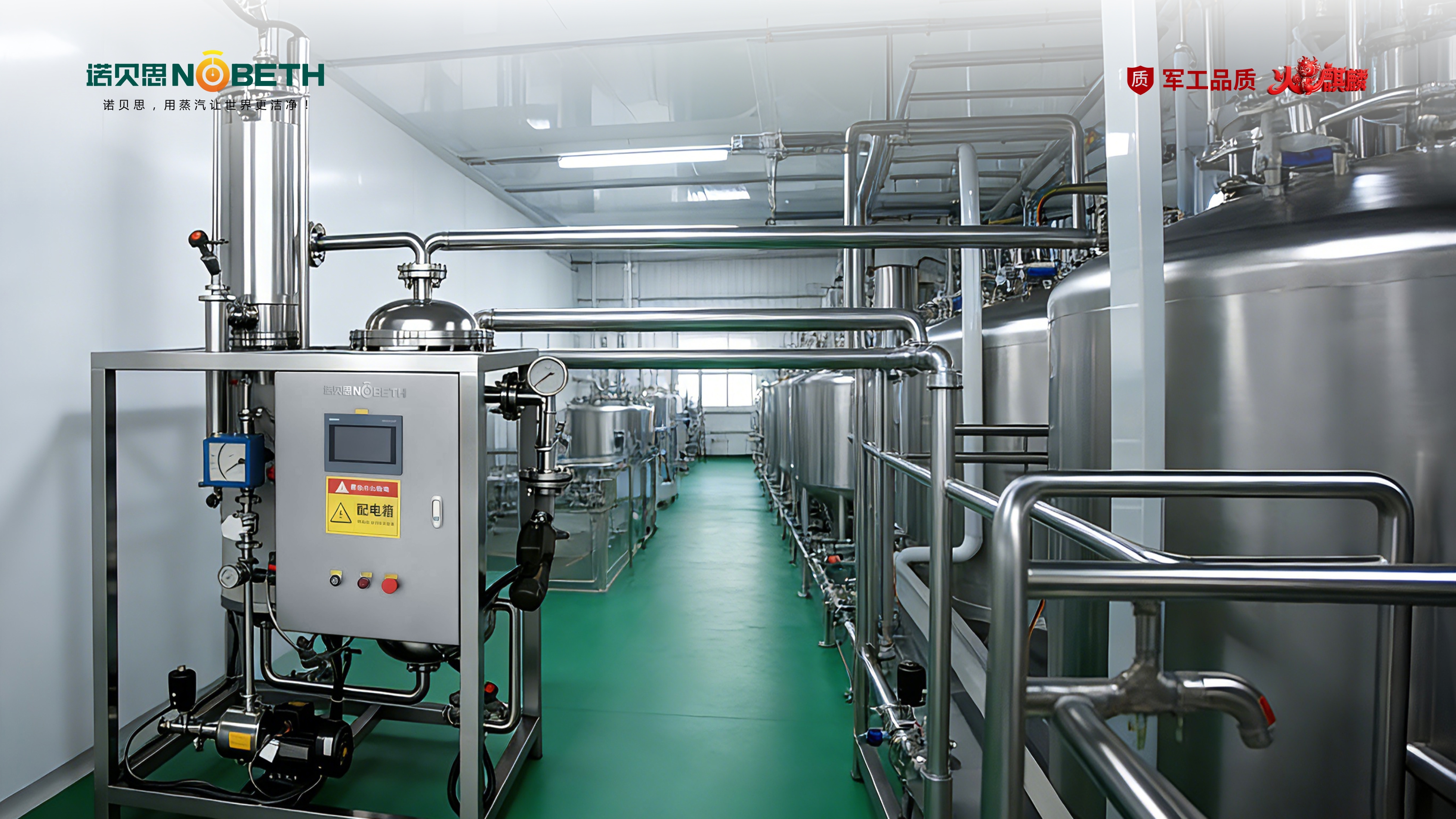
Post time: Jul-20-2026


